
Electrical Safety & Code
Home Inspection Found Electrical Problems? What Columbus Buyers and Sellers Should Do
By Sky's Electrical Contracting · Oct 23, 2026
Short answer
If a home inspection flags electrical problems, have a licensed electrician evaluate the items before you decide what to fix, negotiate or walk away from. A home inspector's report is a starting point, not a repair list. Some findings, like a burning smell, signs of heat or a Federal Pacific panel, should be looked at right away. Others may be minor corrections. An older home also does not have to meet every part of today's electrical code.
Is a Home Inspection Report the Final Word on Electrical Problems?
No.
A home inspector looks at a lot of systems in a short amount of time. When something electrical looks off, the report usually flags it for further evaluation.
That is helpful, but it is not the same as a diagnosis.
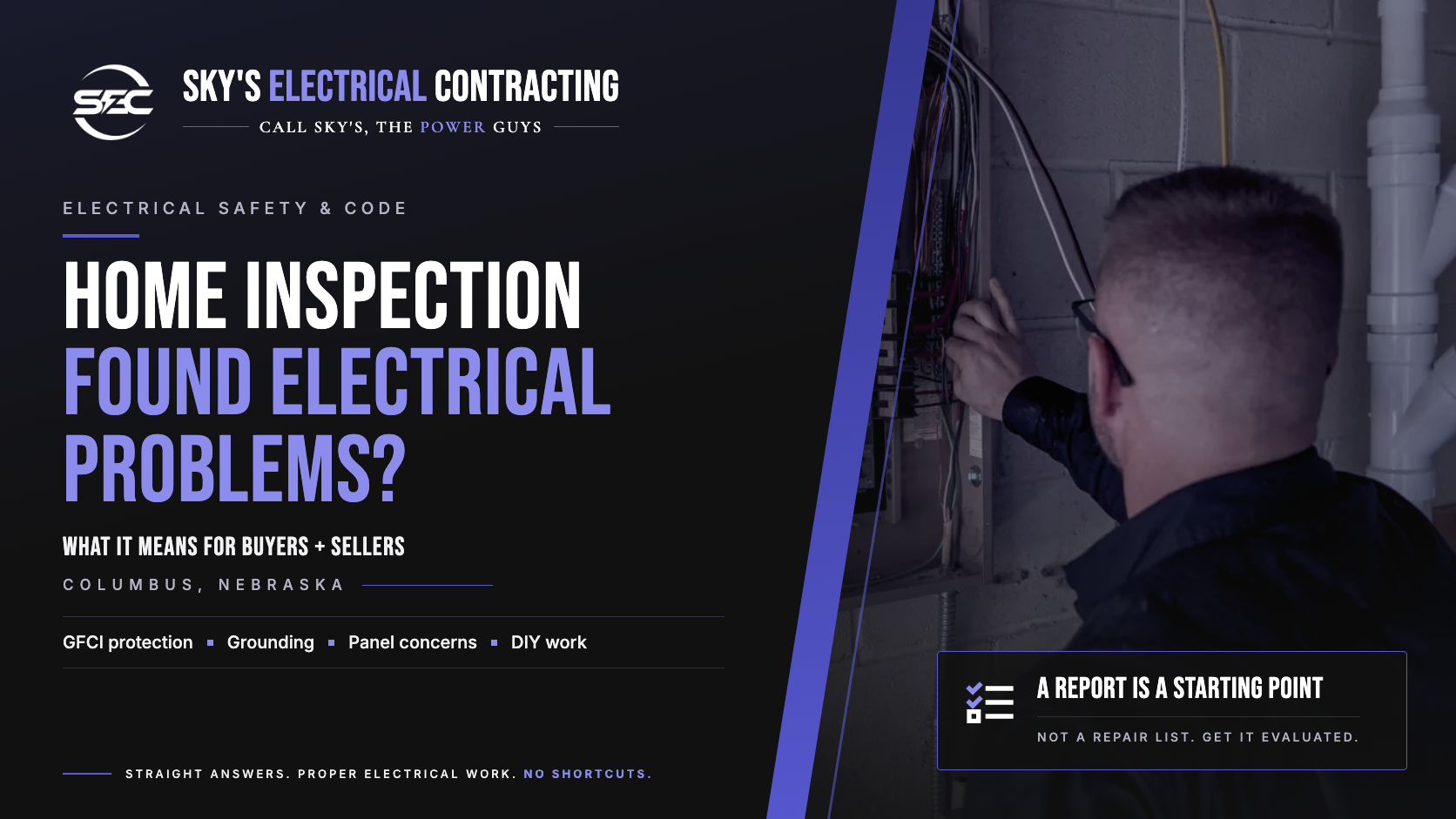
A home inspector’s report is a starting point. An electrician can evaluate the actual electrical system and determine what work is really required.
That distinction matters during a home sale. A line item that sounds serious may turn out to be a simple correction. A line item that sounds minor may point to a bigger problem behind it.
What Electrical Problems Do Home Inspectors Commonly Flag?
Electrical items come up often during a home sale. Here are the types of findings that tend to show up on Columbus-area inspection reports, and what they usually mean.
Missing GFCI Protection
GFCI protection is designed to reduce the risk of electric shock by shutting off power when it detects certain current imbalances.
Inspectors often note missing GFCI protection in areas such as:
- Bathrooms
- Kitchens
- Garages
- Outdoor areas
- Basements
- Utility areas
Not every receptacle in these areas is treated the same. What applies depends on the installation and the electrical code that governs the work.
Adding GFCI protection is often a straightforward correction.
Receptacle and Grounding Concerns
Grounding and bonding are part of the electrical system’s safety design.
An inspector may flag receptacles that are not grounded correctly, missing grounding connections, or older work that was modified incorrectly.
The fix depends on how the system is actually installed. It may involve the receptacle, the equipment grounding conductor, the panel or the grounding electrode system.
Electrical Panel Concerns
Panel findings can include incorrect breakers, missing or unclear circuit labels, damaged components, improper wiring or older equipment.
One panel type Tim Sky, owner of Sky’s Electrical Contracting, specifically tells people to pay attention to is Federal Pacific Electric, or FPE. Tim recommends having FPE panels evaluated. They have a tendency to not trip properly under load and can overheat over time.
A panel finding does not automatically mean the whole panel has to be replaced. Sometimes the issue can be corrected. Sometimes larger panel work makes sense. An evaluation tells you which.
Older Wiring
Many homes around Columbus have older electrical systems. An inspector may note older wiring types or wiring that deserves a closer look.
Older does not automatically mean unsafe. What matters is the condition of the wiring, whether it has been modified, and whether it can support how the home is used today.
Previous DIY or Improper Work
This is one of the most important categories on any report.
Tim has seen electrical problems created by changes such as:
- Oversized breakers
- Incorrect fuse sizes
- Wiring that does not match its circuit protection
- Improper modifications
- Electrical additions that were not planned correctly
One shortcut Tim specifically warns about is installing a larger breaker because a circuit kept tripping. The breaker protects the wiring on that circuit. Going bigger without confirming the wiring supports it can remove that protection.
Which Electrical Findings Should Be Handled First?
Not every item on an inspection report carries the same weight.
Have these evaluated right away:
- A burning or unusual electrical smell, especially near the panel
- Signs of heat, scorching or damage on electrical equipment
- A Federal Pacific (FPE) panel
- Breakers or fuses that appear oversized for the wiring
- Equipment that does not operate correctly
Do not remove the panel cover or try to diagnose energized equipment yourself.
These are often more routine corrections:
- Adding GFCI protection where it applies
- Panel labeling and circuit identification
- Individual receptacle or device corrections
An electrician’s evaluation is what moves an item from one list to the other.
Does an Older Home Have to Meet Today’s Electrical Code?
Not necessarily.
Electrical codes change over time. An older installation is not automatically defective just because today’s code contains newer requirements.
Whether something needs to be corrected depends on factors such as:
- The condition of the installation
- When the work was completed
- Whether the electrical system has been modified
- The scope of any current project
- Whether the installation presents an actual electrical problem
This is a common point of confusion during a home sale. A report may note that something “does not meet current standards.” That is worth understanding, but it is not the same as a required repair.
What Should Buyers Do?
If you are buying a home in Columbus and the inspection flagged electrical items:
- Read the electrical section closely. Note which items are flagged for further evaluation.
- Get an electrician’s evaluation early. Inspection contingency periods move quickly. The sooner an electrician looks at the system, the more time you have to decide.
- Ask what is urgent and what is optional. Safety items and nice-to-have upgrades should not be lumped together.
- Use the findings in your conversation with the seller. An electrician’s explanation of what was found and what is recommended gives you and your agent something concrete to work with.
What Should Sellers Do?
If you are selling and a buyer’s inspection flagged electrical items:
- Get your own evaluation. Understand what the items actually are before agreeing to a repair list or a price reduction.
- Fix the clear safety items. Burning smells, damaged equipment and oversized breakers should not wait.
- Keep documentation. Records of completed electrical work help answer questions from the buyer, their agent and their inspector.
Thinking about selling soon? Having an electrician look at known concerns before you list can keep surprises out of the inspection.
How Does the Electrical Correction Process Work?
Here is how Sky’s handles electrical corrections after a home inspection:
- Review the report. Start with the inspection report and the specific electrical items it flagged.
- Evaluate the existing electrical work. Sky’s looks at how the system is actually installed and what condition needs to be corrected.
- Explain the correction. You get an explanation of what was found and what work is recommended before anything starts.
- Complete the work. Sky’s completes the agreed correction based on the project requirements.
- Reinspection when required. If the work is part of a permitted project, it moves through the applicable inspection process.
Do Electrical Corrections Need a Permit or Inspection in Columbus?
Some do, depending on the work involved.
The City of Columbus directs electrical permits and inspections to the Nebraska State Electrical Division. Platte County is currently part of Nebraska State Electrical Inspection District 16. The state also provides an inspection jurisdiction map you can search by address.
Nebraska generally uses the 2023 National Electrical Code as its minimum standard, subject to Nebraska-specific laws, amendments and exceptions. That is why Columbus code questions should be answered using Nebraska’s rules, not a generic online checklist.
If an inspector issues a correction on permitted work, the issue generally needs to be addressed before final approval, and reinspection may be required.
Learn more in Do You Need an Electrical Permit in Columbus, Nebraska?
Electrical Corrections After a Home Inspection in Columbus, Nebraska
Sky’s Electrical Contracting evaluates and corrects electrical issues found during home inspections throughout Columbus, Nebraska and the surrounding area, including Schuyler, David City, Central City, Clarks, York, Fremont and Norfolk.
Tim Sky grew up in Columbus and began working in the electrical trade in 2012. Much of his background is in commercial and industrial electrical work, where following electrical requirements and paying attention to installation details were a regular part of the job.
That shapes how Sky’s handles inspection items: figure out what is actually wrong instead of assuming every older system or inspection comment needs a major replacement.
Related reading:
- 7 Signs You May Need an Electrical Panel Upgrade in Columbus, Nebraska
- Why Does My Breaker Keep Tripping?
Learn more about electrical code corrections in Columbus or request an electrical evaluation from Sky’s.
Related Resources
- 7 Signs You May Need an Electrical Panel Upgrade in Columbus, Nebraska
Not every older electrical panel needs to be replaced. Learn seven signs that your panel may need attention, what Tim Sky looks for in Columbus-area homes, and when a panel or service upgrade may make sense.
- Why Does My Breaker Keep Tripping? Common Causes and When to Call an Electrician
A breaker that keeps tripping is usually reacting to a problem somewhere on the circuit. Learn common causes Tim Sky sees, why a larger breaker is not the answer, and when Columbus homeowners should have the issue checked.
- Do You Need an Electrical Permit in Columbus, Nebraska? What Homeowners Should Know
Some electrical projects in Columbus, Nebraska require permitting and inspection before the work is complete. Learn who handles electrical permits locally, which projects commonly raise permit questions, and what homeowners should know before starting electrical work.
Frequently Asked Questions
Need an Electrician in Columbus?
Call 402-710-9587 or send a service request and Sky's will get back to you.